
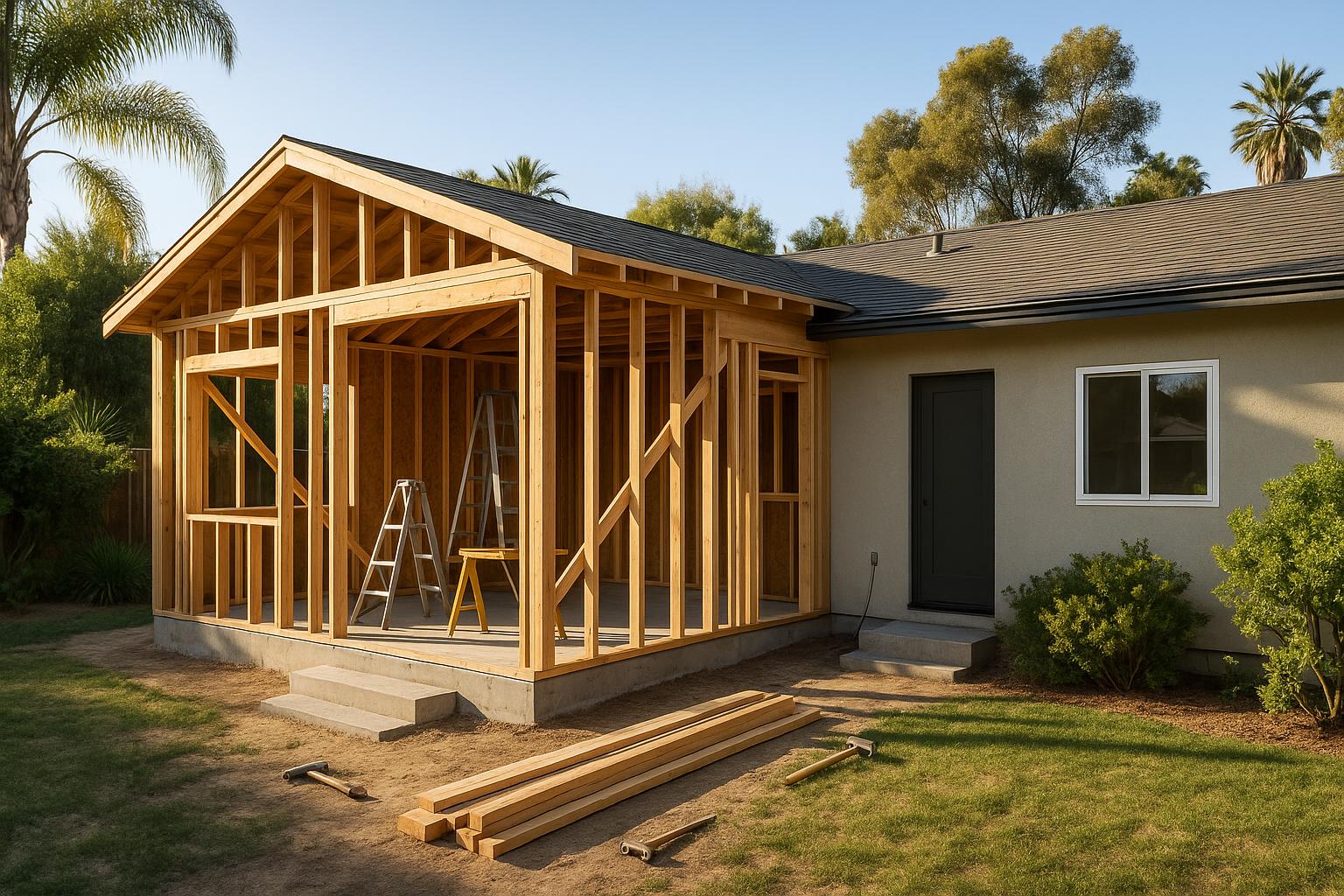
Why San Diego Homeowners Are Adding On Instead of Moving
San Diego's housing market isn't getting any cheaper. With median home prices well above the national average, many homeowners are discovering that adding square footage to their current property makes more financial sense than buying a new house. Whether you need an extra bedroom for a growing family, a home office that actually feels like an office, or a second story to capture ocean breezes, a home addition lets you stay in the neighborhood you love while building exactly what you need.
But here's the catch: additions are one of the most complex remodeling projects you can take on. Without careful planning, costs can spiral quickly. The good news is that with the right approach, you can keep your project on track and on budget. Here's how.
Step 1: Define What You Actually Need
Before you call a contractor or browse Pinterest, sit down and answer one question honestly: What problem are you trying to solve?
It sounds simple, but skipping this step is the number one reason budgets blow up. Homeowners start with a clear goal — say, a new family room — and gradually add a bathroom, a wet bar, upgraded windows, and custom built-ins. Each addition seems small on its own, but together they can double the original estimate.
Start by making two lists:
- Must-haves: The non-negotiable features that solve your core problem.
- Nice-to-haves: Upgrades you'd love but could live without or add later.
This framework gives you a built-in pressure valve. When costs start creeping up — and they will — you'll know exactly where to trim without sacrificing the things that matter most.
Step 2: Understand What Drives Costs in San Diego
Not all square footage is created equal. Several factors specific to the San Diego area can significantly affect your addition's price tag:
Permitting and Zoning
The City of San Diego has specific zoning regulations that dictate how much you can build on your lot, how close to property lines you can go, and what your addition can look like in certain neighborhoods. Homes in communities like La Jolla or parts of Pacific Beach may have additional design review requirements. Permit fees and the time it takes to get approvals vary, and delays cost money.
Foundation and Structural Work
If your addition requires a new foundation — which most ground-level additions do — that's a significant cost driver. Second-story additions may need structural reinforcement to the existing first floor. Either way, the engineering work isn't optional, and it's not the place to cut corners.
Utility Connections
Extending plumbing, electrical, and HVAC systems into a new space adds cost, especially if your existing systems are older and need upgrading to handle the additional load. In neighborhoods like Clairemont and Kearny Mesa, where many homes were built in the 1950s and 60s, this is a common issue.
Materials and Labor
San Diego's construction market is competitive. Skilled labor is in high demand, and material costs fluctuate. Getting multiple bids helps, but be cautious about choosing a contractor solely because they're the cheapest — that often leads to the most expensive outcome.
Step 3: Set a Realistic Budget (Then Add a Cushion)
Once you have a general sense of scope, it's time to set a number. Here are some general guidelines for San Diego home additions:
- Basic room addition (no plumbing): $250–$400 per square foot
- Addition with a bathroom: $350–$500+ per square foot
- Second-story addition: $400–$600+ per square foot
These ranges are broad because every project is different. A 400-square-foot addition could cost $100,000 or $240,000 depending on complexity, finishes, and site conditions.
The most important budgeting rule: Set aside 10–15% of your total budget as a contingency fund. Unexpected issues — outdated wiring behind walls, soil conditions that complicate the foundation, supply chain delays — are not a matter of if but when. That contingency fund is what keeps surprises from derailing your project.
Step 4: Choose the Right Contractor
Your contractor is your most important partner in staying on budget. Here's what to look for:
- Local experience: A contractor who regularly works in San Diego understands local permitting, inspectors, subcontractor networks, and common issues with the region's housing stock.
- Transparent pricing: Look for detailed, itemized estimates — not vague lump sums. You should understand where every dollar is going.
- Clear communication: Budget overruns often stem from miscommunication. Your contractor should proactively flag potential issues and present options, not just hand you change orders.
- Proper licensing and insurance: This is non-negotiable in California. Verify their CSLB license and ask for proof of insurance.
At Sandstone Home Extensions, we walk every client through a detailed planning process before any work begins. We believe the best way to protect your budget is to make smart decisions upfront — not scramble to fix problems later.
Step 5: Phase Your Project If Needed
If your dream addition exceeds your current budget, consider phasing the work. For example, you might build the addition now with basic finishes and upgrade the flooring, cabinetry, or fixtures in a year or two. Smart phasing requires planning — your contractor needs to design the space so future upgrades are easy to execute — but it lets you get the space you need now without overextending financially.
This approach works especially well in Mission Valley and other San Diego neighborhoods where property values are climbing. The addition increases your home's value immediately, and the upgrades you add later compound that return.
Step 6: Don't Forget the Hidden ROI
A well-planned home addition isn't just an expense — it's an investment. In San Diego's strong real estate market, quality additions typically recoup 50–70% of their cost at resale, and some — particularly extra bedrooms and bathrooms — can return even more.
But the real ROI is harder to quantify: the extra space for your family to spread out, the home office that lets you skip the commute, the guest suite that means your parents can visit comfortably. Those returns pay dividends every single day.
Ready to Start Planning?
A home addition is a big decision, but it doesn't have to be an overwhelming one. With clear priorities, a realistic budget, and the right team behind you, you can add the space you need without the financial stress.
If you're a homeowner in San Diego thinking about an addition, we'd love to help you explore your options. Sandstone Home Extensions offers free consultations where we'll assess your property, discuss your goals, and give you an honest estimate of what it will take to bring your vision to life. No pressure, no surprises — just a clear path forward.